
How a container actually gets loaded — and why the plan changes the moment work begins.
Before any loading begins, we measure the equipment, check its dimensions and weight, and work out what can safely be removed. We also draw on the experience of hundreds of similar loads we have handled before.
None of that produces a finished plan. It produces a starting point.
Almost every loading still requires decisions made on the spot — once the equipment is actually standing next to the container, not on a piece of paper.
Loading a tractor with a cab into a 40-foot shipping container requires more than simply driving the machine inside. The loading sequence is planned according to the dimensions and weight distribution of every item in the shipment.
In this example, heavy attachments, wheels, rotary tillers, and other removable parts are loaded first. These components are positioned at the front and bottom of the container, creating a stable foundation while making full use of the available space.
Only after these parts are secured is the cab tractor loaded into the container. This loading sequence protects the tractor, improves weight distribution, and maximizes container capacity.
There is no universal loading plan for cab tractors. Every shipment is different, depending on the tractor model, attachments, container dimensions, and the combination of machines being exported.
Container loading decisions like these are based on experience gained from hundreds of shipments—not on a standard loading diagram.
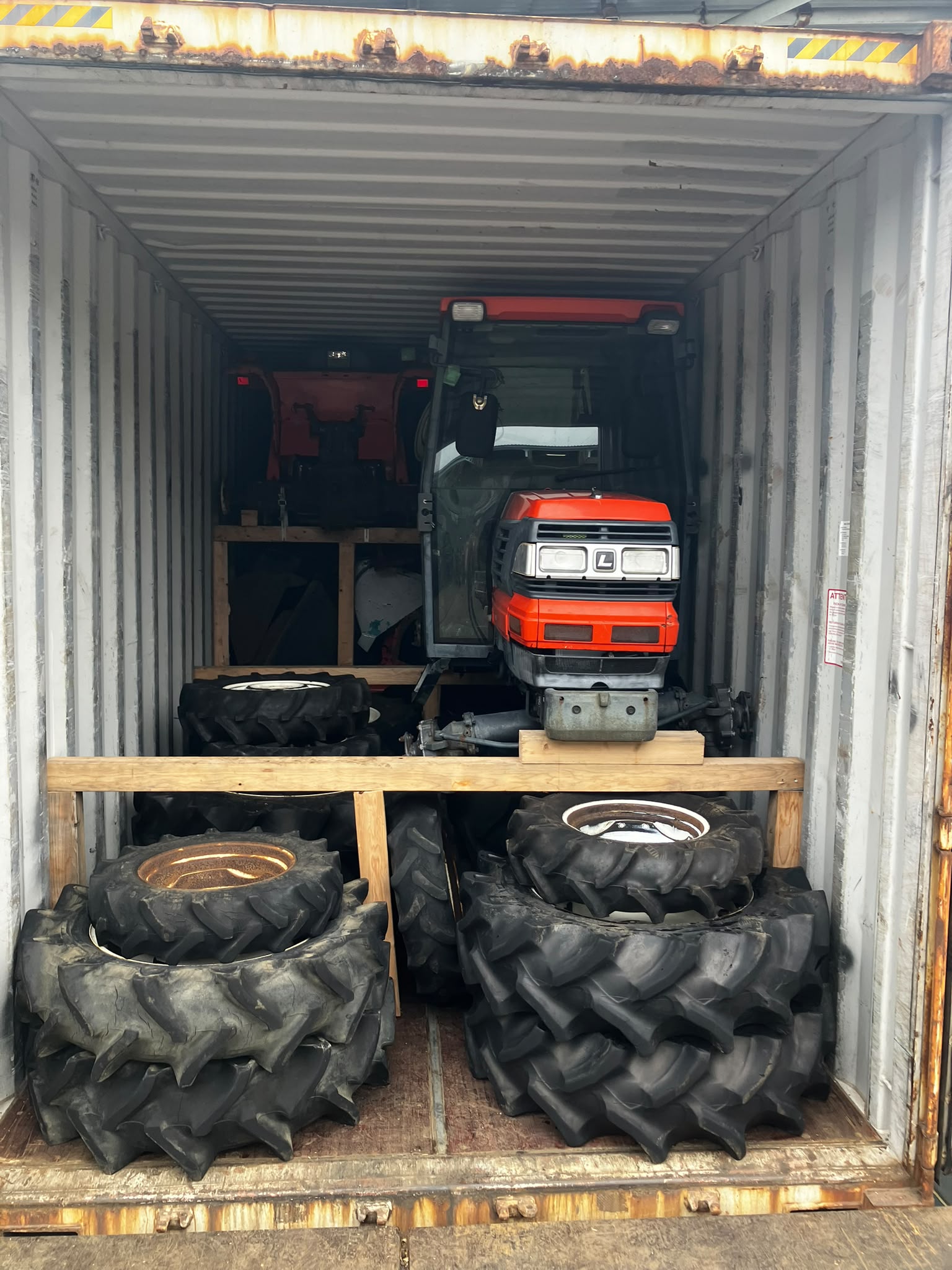 Attachments loaded first
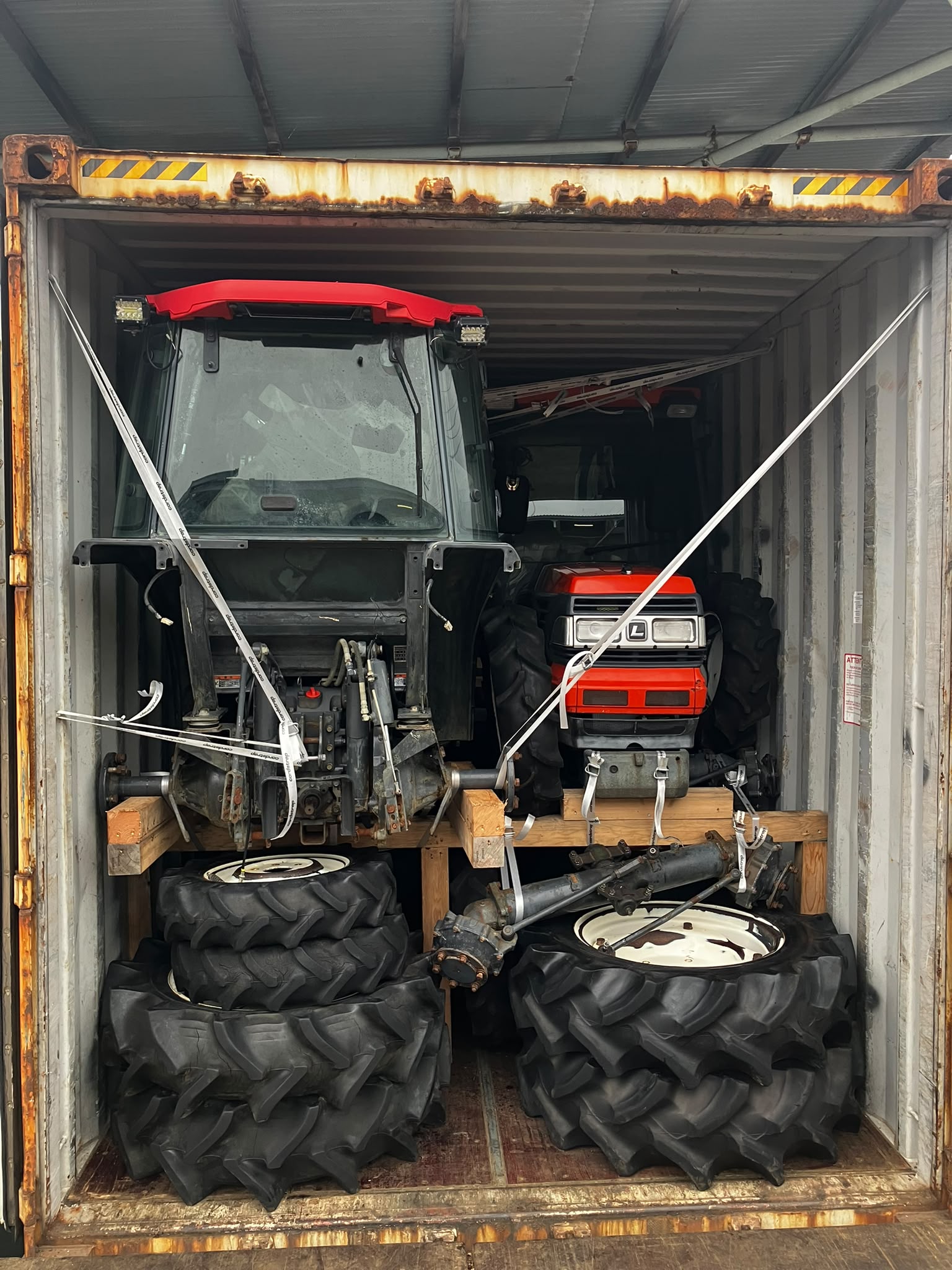 Cab tractor
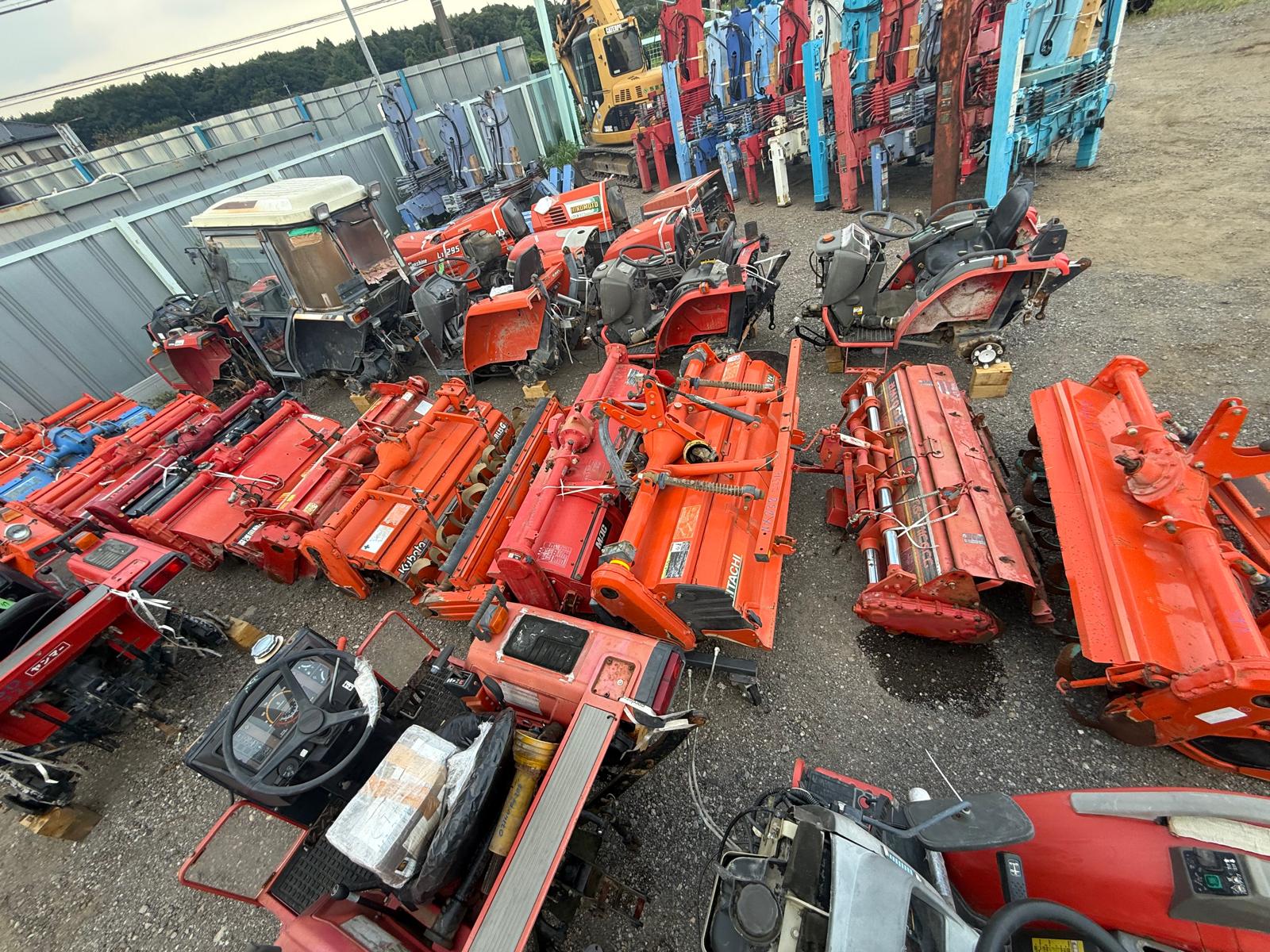
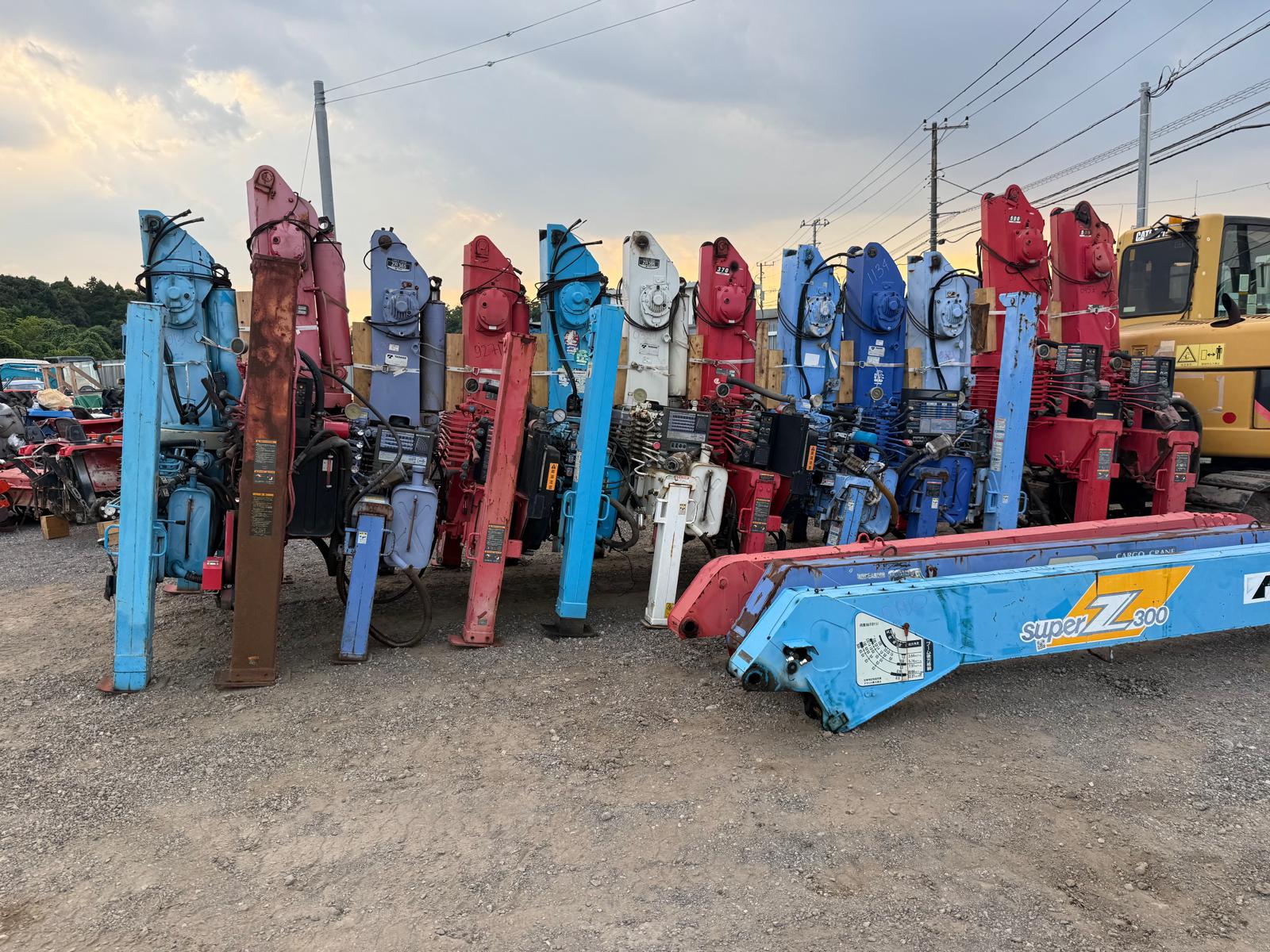
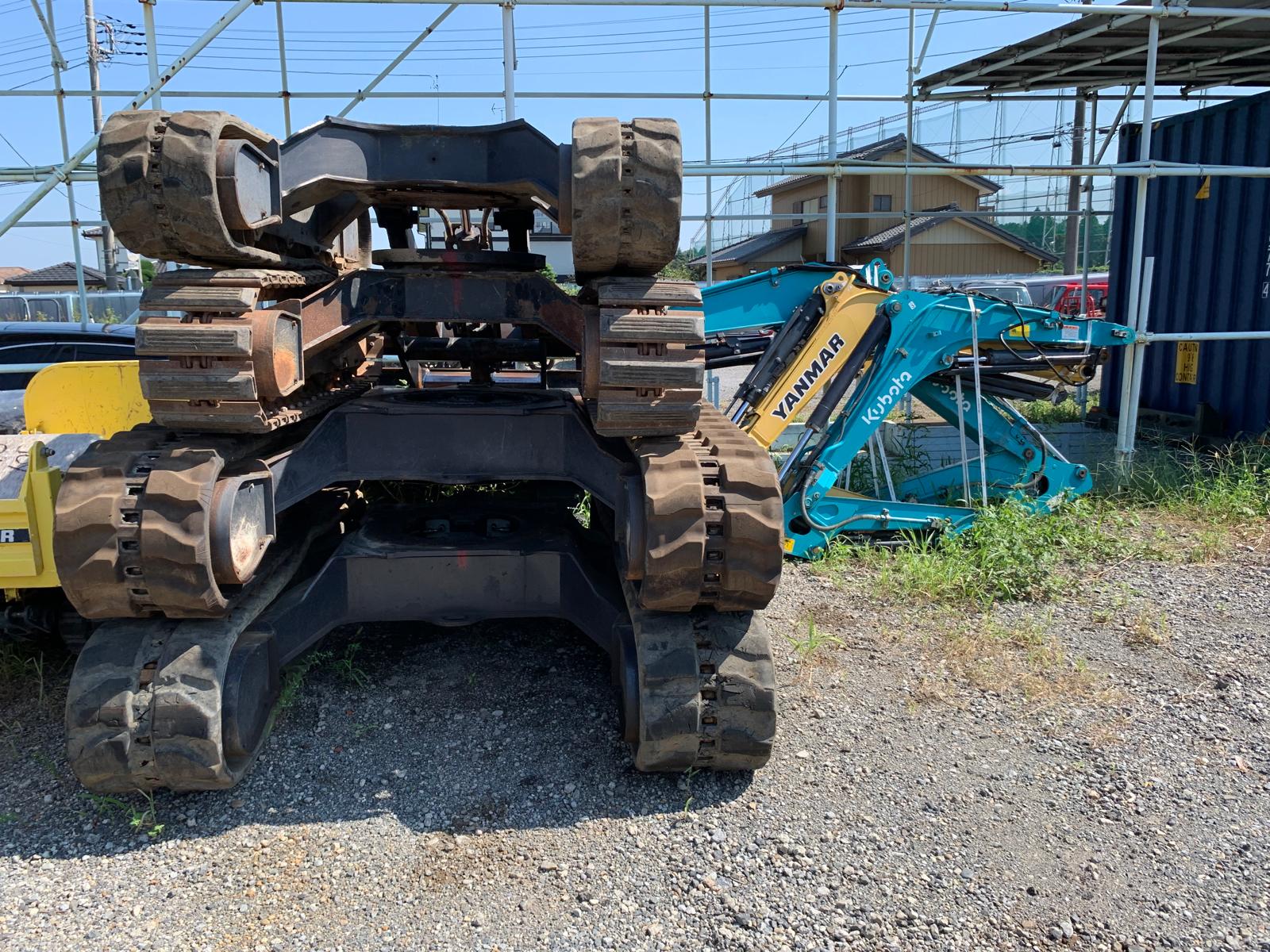
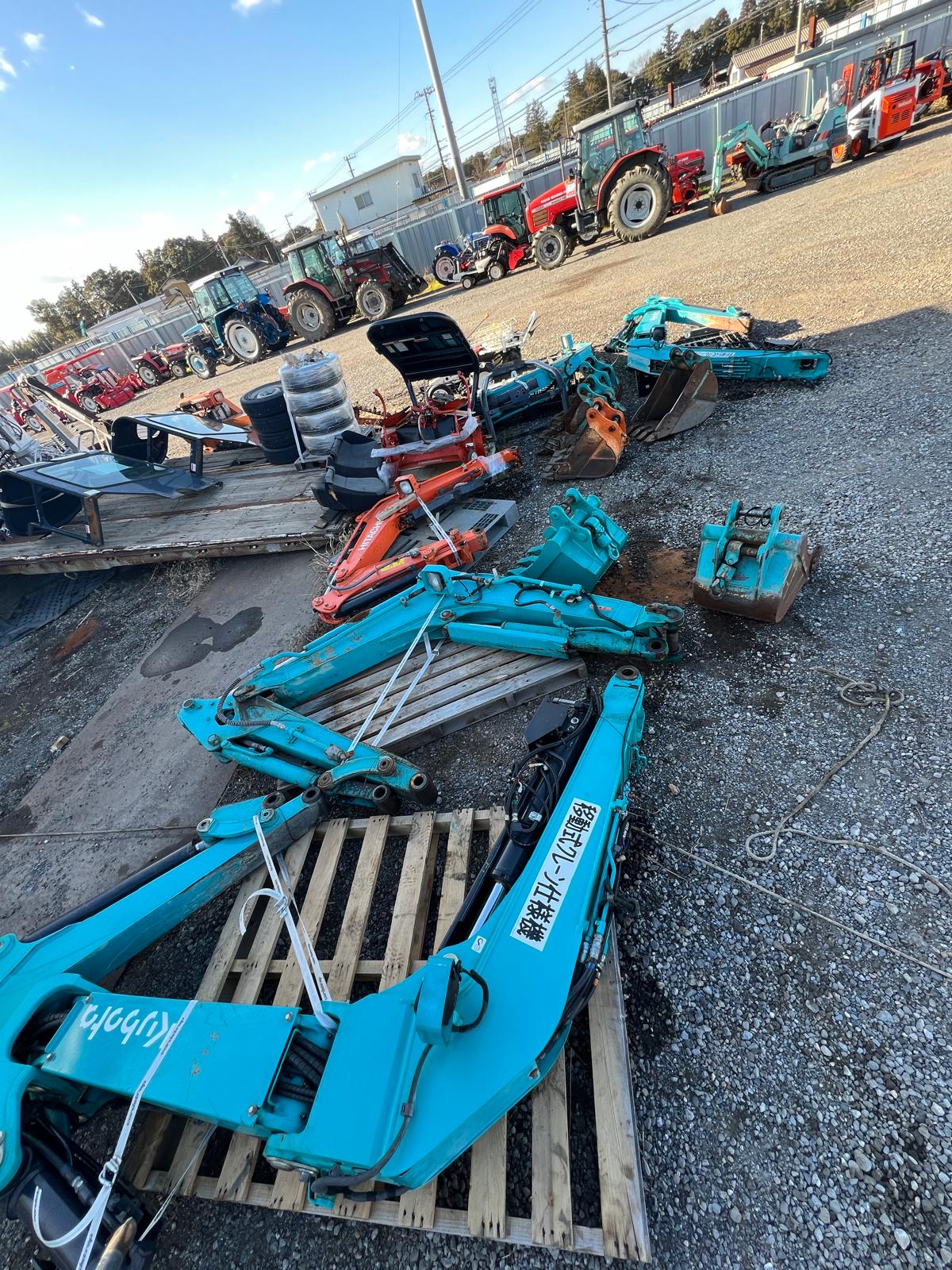

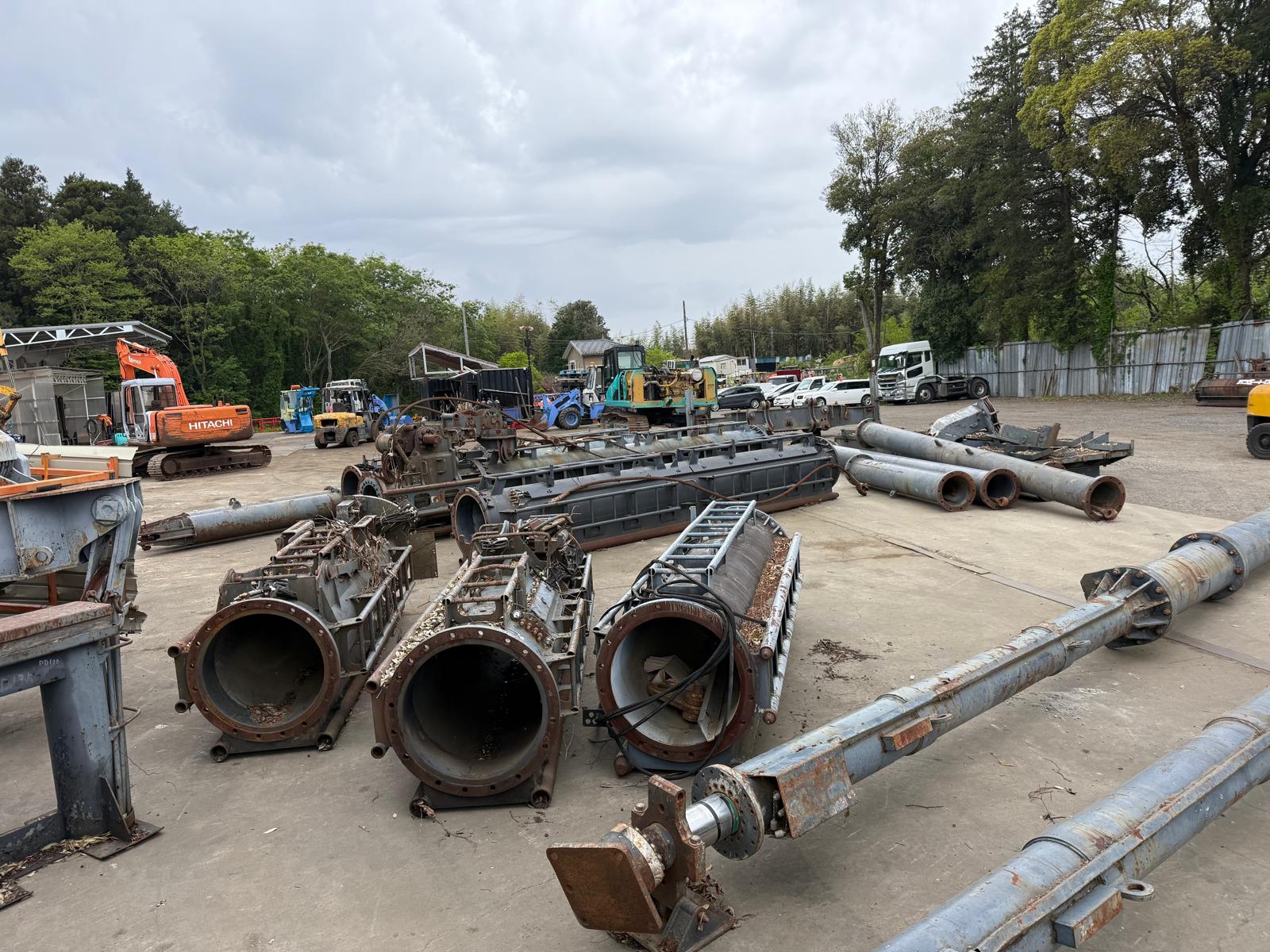
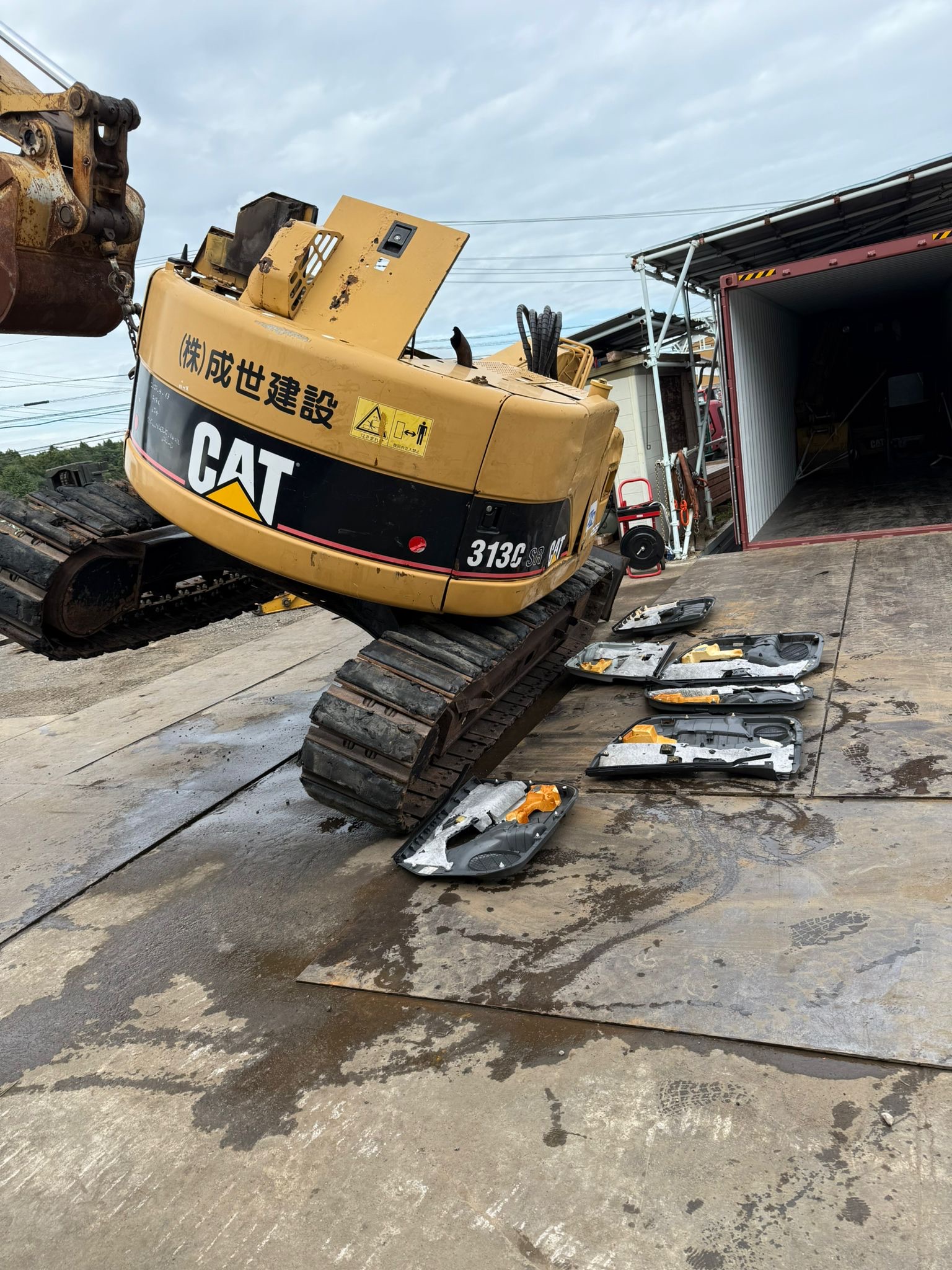
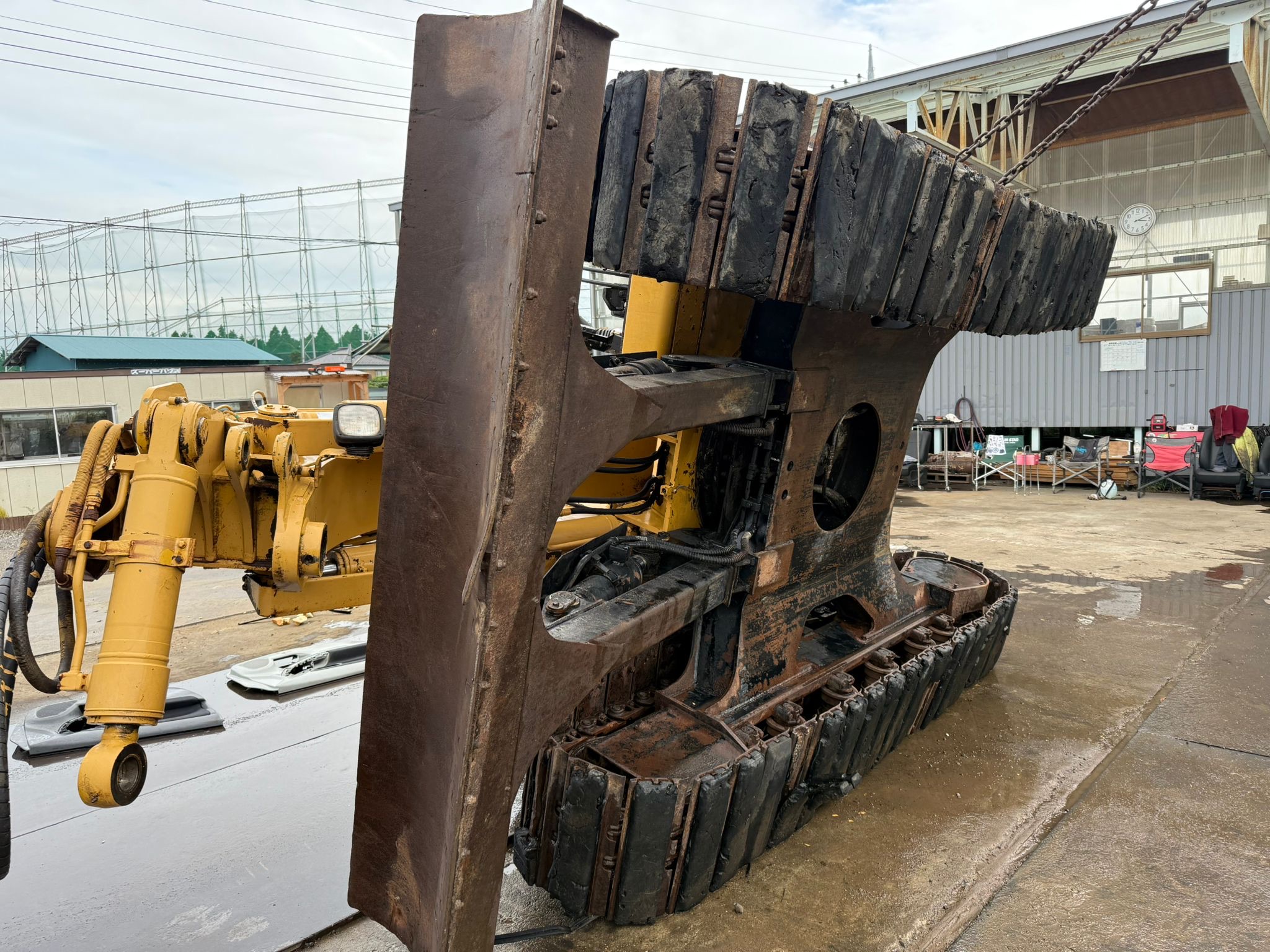
Many mid-size excavators cannot be loaded into a standard 40-foot shipping container in their original configuration. Even after removing the cab, the upper structure often remains too wide to fit within the container's internal width.
For this reason, our loading strategy begins long before the container arrives.
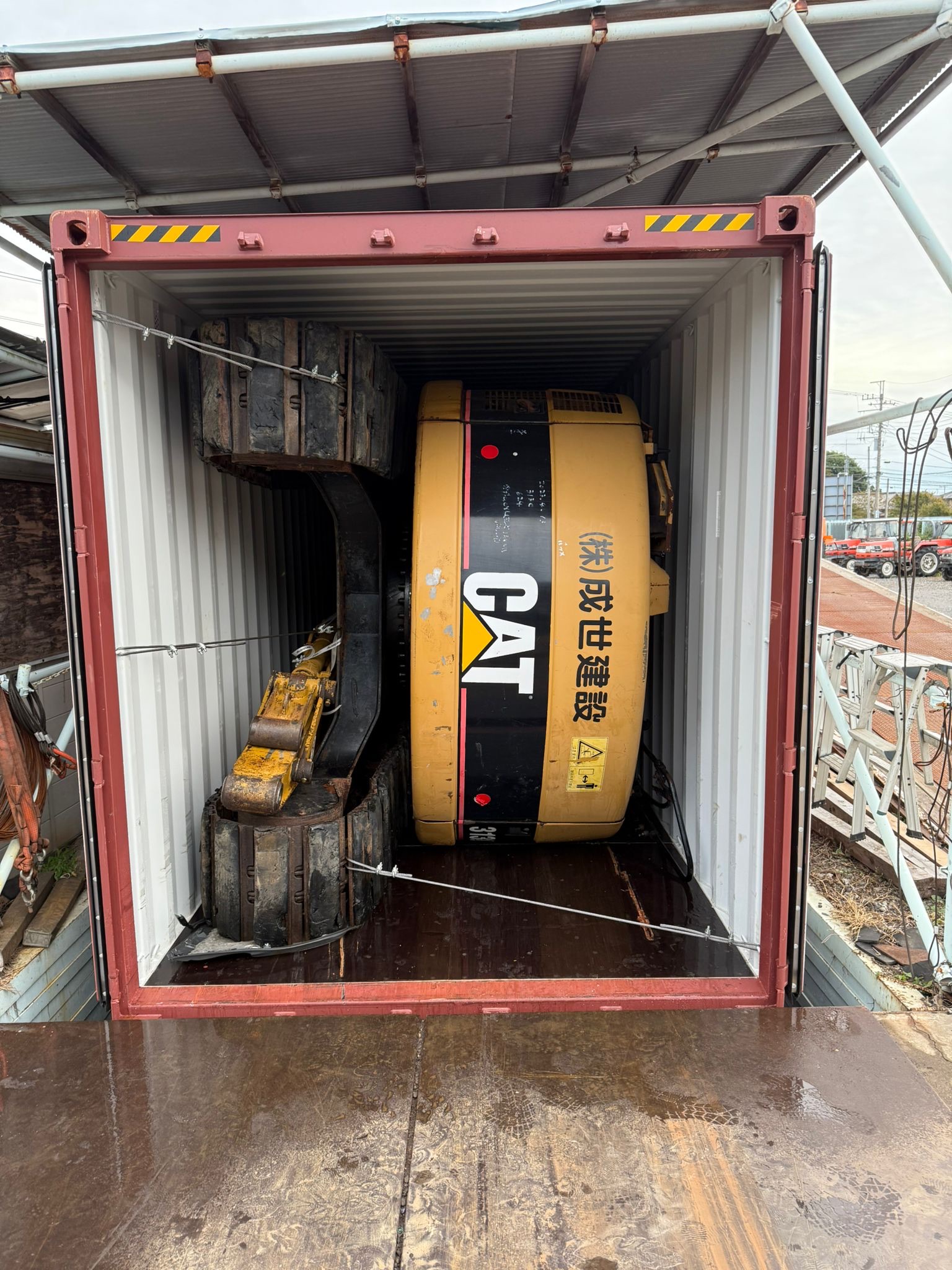
First, the excavator is inspected and measured. The cab and boom are removed to reduce overall dimensions. The machine is then carefully rotated onto its side, allowing it to fit inside a standard shipping container without cutting or modifying the main structure.
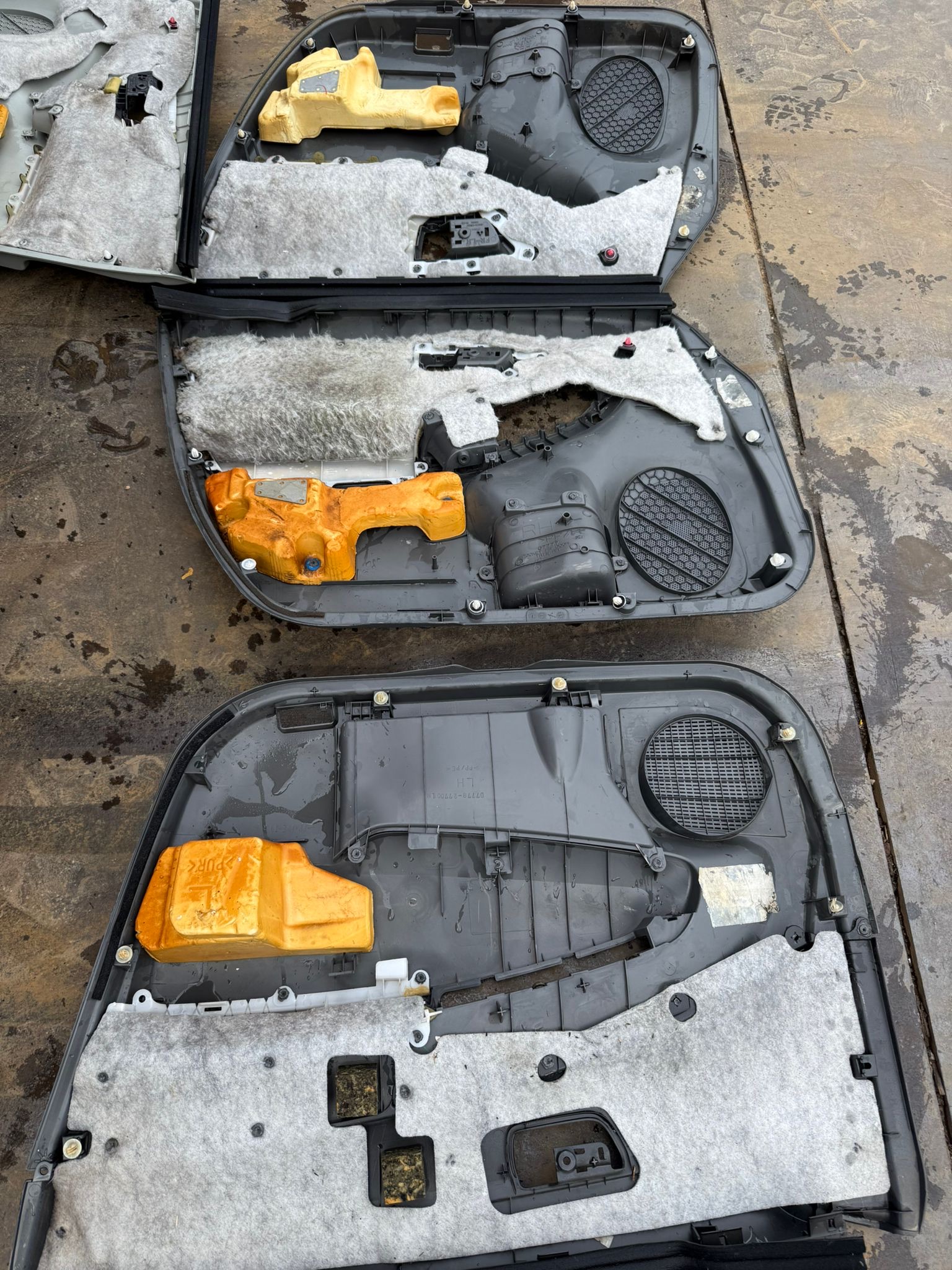
During loading, plastic panels from previously dismantled vehicles are placed between the excavator and the container floor. These panels act as sacrificial sliding pads, reducing friction and protecting painted surfaces while the excavator is positioned inside the container.
Every excavator requires a different loading strategy depending on its dimensions, transport destination, and the equipment sharing the container. There is no universal loading method. Each shipment is planned individually to maximize space while ensuring safe transport.
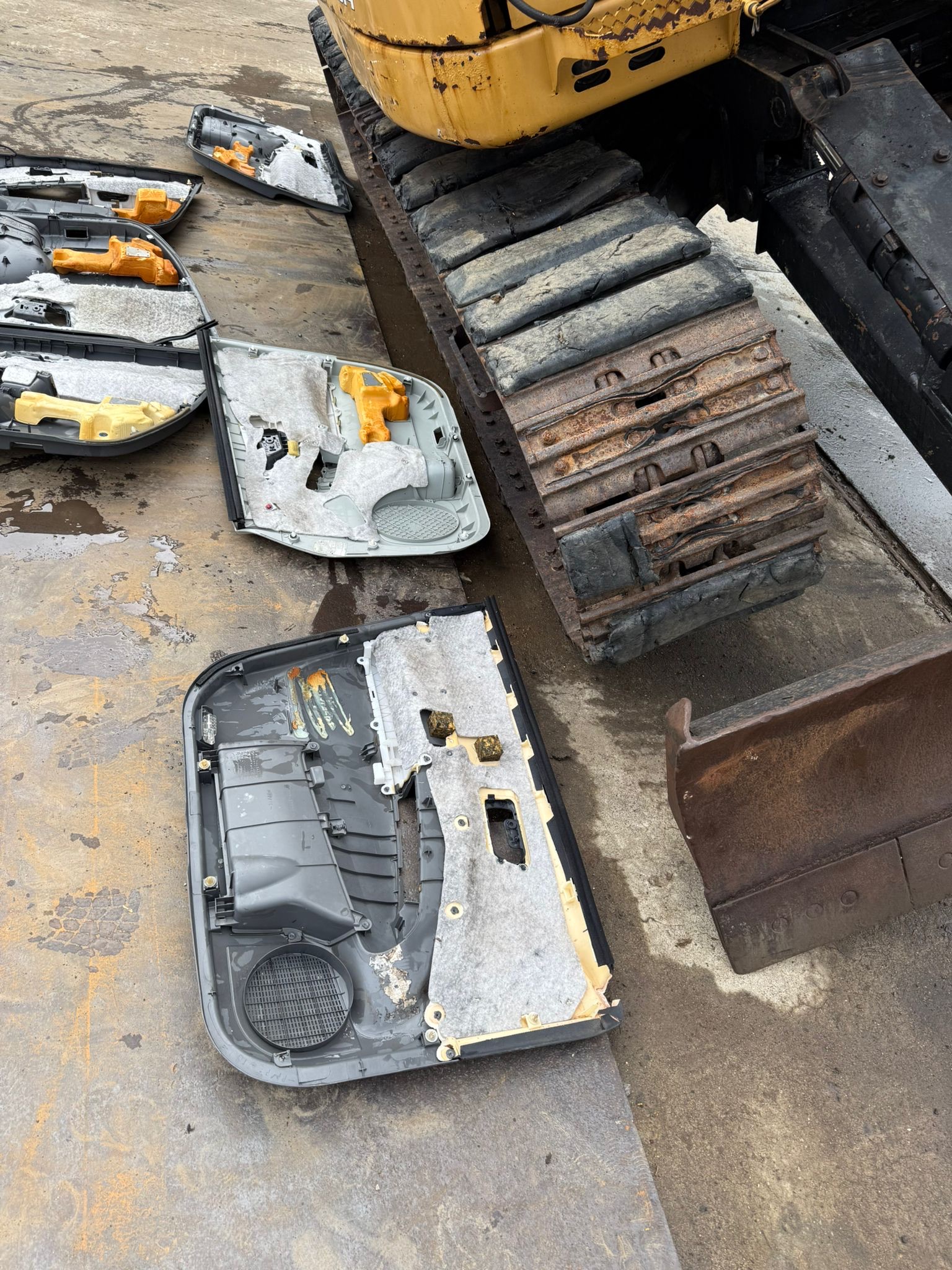
No two containers are alike. We start from proven loading patterns, but almost every load requires decisions that can only be made on site. That is why the team's experience matters so much.